Ben Sullivan · 21 October 2026
Drought Readings and Canopy Finds Reveal Shifting Connections Between Emberwald Streams and Insect Habitats
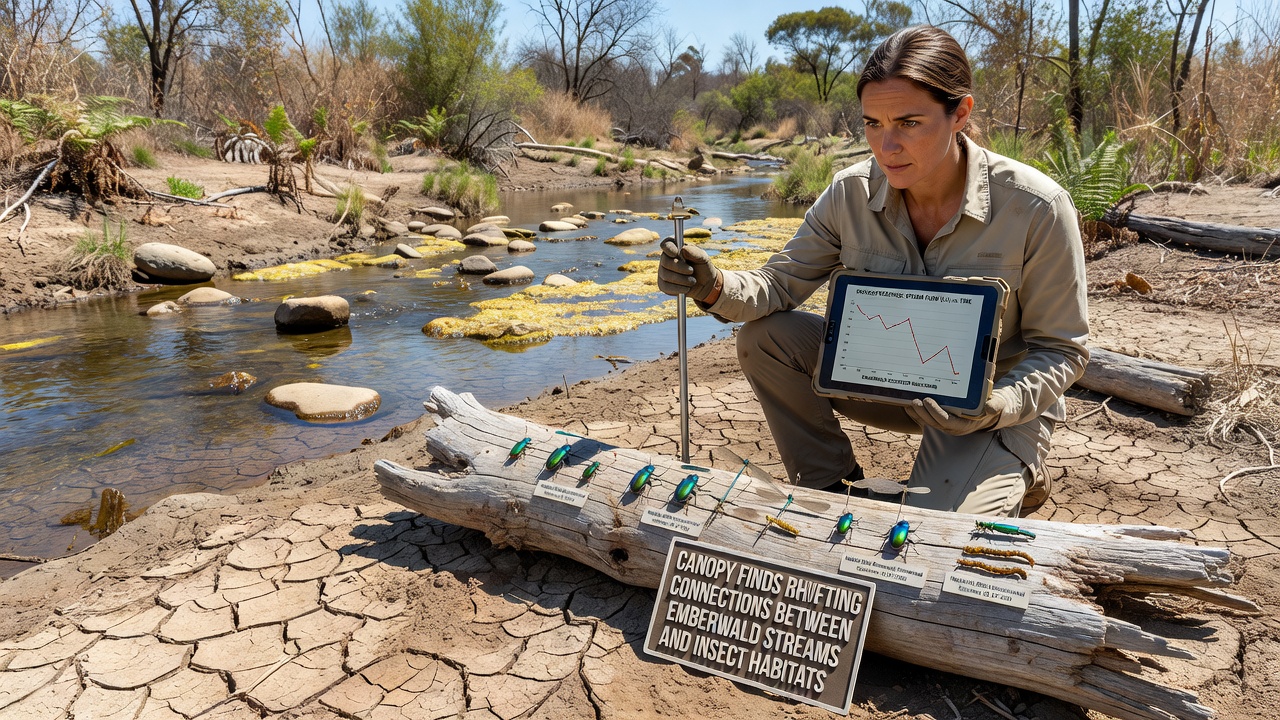
Recent drought readings collected across Emberwald have highlighted measurable drops in stream flow rates while canopy surveys conducted in the same zones point to altered foliage density that affects light penetration and moisture retention. Observers note these changes coincide with shifts in insect distribution patterns where certain aquatic species move upstream or seek refuge in shaded understory areas. Data gathered through October 2026 shows stream levels at several monitoring stations falling below long-term averages established over the previous decade and canopy leaf area indices declining by measurable percentages in lower elevation transects.
Stream Flow Patterns and Drought Indicators
Monitoring stations positioned along Emberwald's primary waterways recorded reduced discharge volumes during the summer months leading into October 2026 and researchers attribute part of this decline to prolonged periods of lower precipitation combined with higher evaporation rates. These readings align with broader regional reports from the European Environment Agency on altered hydrological cycles in temperate forest zones. Insect habitats tied directly to stream margins show corresponding adjustments because many larvae depend on consistent water flow for feeding and development cycles.
Canopy measurements taken at multiple heights reveal denser upper layers in some sections yet thinner mid-canopy coverage elsewhere and this vertical restructuring changes the amount of sunlight reaching the forest floor. Those who've studied similar systems observe that reduced light in certain patches encourages growth of shade-tolerant plants while drier conditions near streams limit moss and leaf litter accumulation that normally supports decomposer insects. The interplay between these factors creates habitat mosaics where species richness varies sharply over short distances.
Canopy Surveys and Insect Population Responses
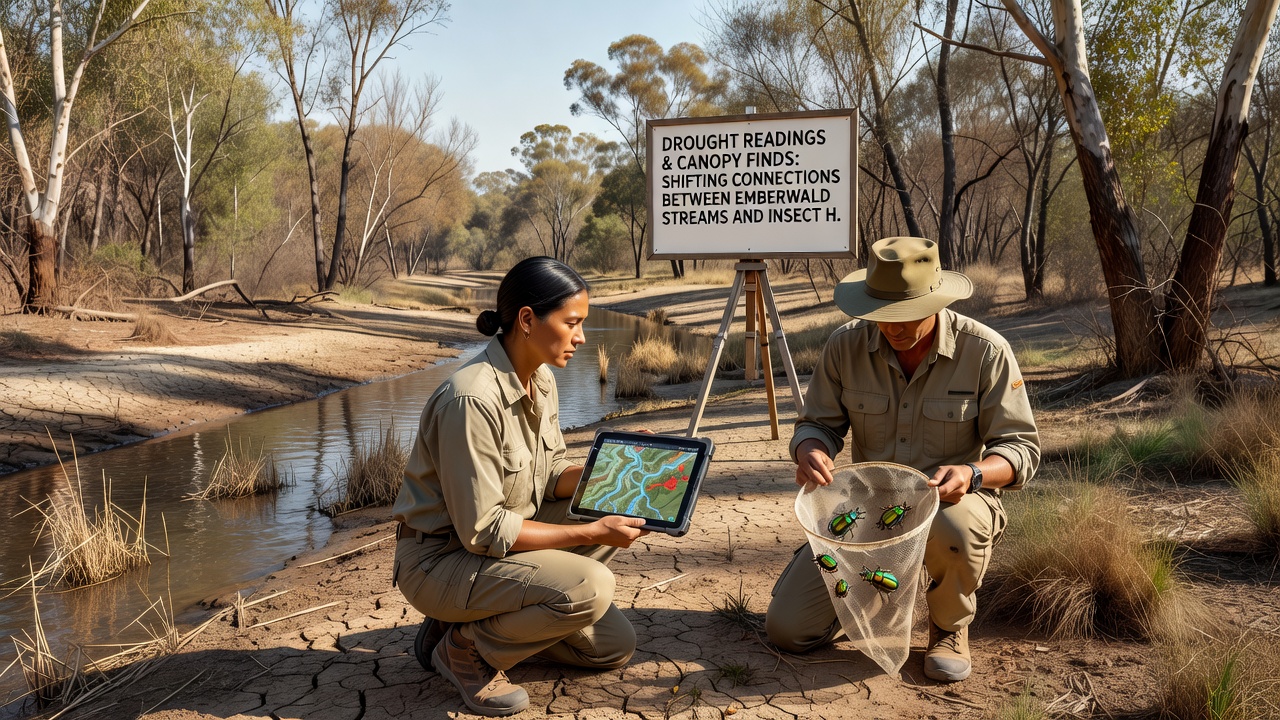
Researchers mapped canopy gaps using aerial and ground-based sensors and found that areas with increased gap frequency experience faster soil drying which in turn reduces the availability of moist refugia for terrestrial insects that migrate between stream banks and forest interiors. Beetle and fly populations documented in these surveys display altered emergence timing with some groups appearing earlier or later than historical records indicate. Studies from the Australian Bureau of Meteorology on comparable woodland systems suggest such timing shifts can disrupt predator-prey relationships and nutrient cycling processes within the broader ecosystem.
Longer sentences connect multiple observations here because drought stress on trees leads to earlier leaf drop in autumn while residual moisture from streams sustains pockets of humidity that shelter late-season larvae. Data indicates insect biomass in stream-adjacent plots remained stable in zones where canopy closure exceeded seventy percent yet declined noticeably where gaps exceeded twenty percent of the sampled area. These patterns emerge consistently across repeated sampling events conducted through the 2026 season.
Integrated Habitat Connections
Connections between stream conditions and canopy structure become evident when researchers overlay hydrological maps with vegetation indices and the resulting layers show that reduced stream discharge correlates with lower humidity readings at ground level even under intact canopy sections. Insects that rely on both aquatic and terrestrial stages face compounded pressures because larvae encounter lower oxygen levels in slower-moving water while adults encounter fewer suitable oviposition sites amid drier leaf surfaces. Evidence from university-led forest ecology programs in Canada demonstrates parallel responses in boreal transition zones where similar drought-canopy interactions reshape invertebrate communities over successive years.
October 2026 readings add another data point to ongoing time series because they capture post-summer recovery phases that reveal whether insect populations rebound quickly once autumn rains arrive or whether cumulative stress produces longer recovery lags. Field teams continue to track these variables with standardized protocols that allow direct comparison across Emberwald subregions and the resulting datasets feed into models predicting future habitat suitability under varying climate scenarios.
Conclusion
Collective findings from drought readings and canopy assessments illustrate how Emberwald streams and insect habitats respond to changing environmental conditions through interconnected pathways. Continued monitoring will clarify whether current trends stabilize or accelerate and the information supports management decisions aimed at maintaining habitat connectivity across the forest landscape.