Henrik Hansen · 23 September 2026
Canopy Beetle Populations Signal Emberwald Forest Recovery Through Connections to Stream Health Trends
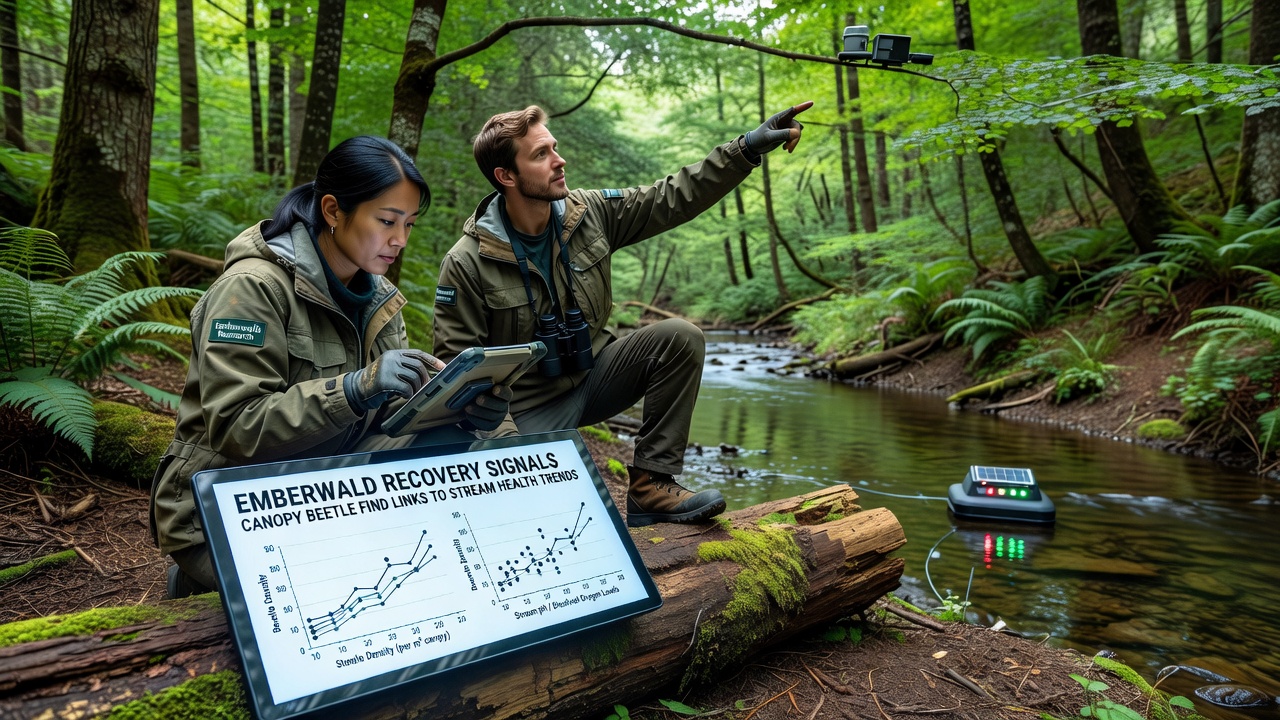
Researchers in Emberwald have identified rising canopy beetle populations as key indicators of forest recovery, and these trends align closely with improvements in nearby stream health metrics. Data collected through 2026 shows beetle density increases correlate with higher levels of organic debris in waterways plus reduced sediment loads, which together point to stabilizing ecosystems after past disturbances. Observers note that such connections emerge because beetles process leaf litter and fallen branches, channeling nutrients downward into soil layers that eventually reach streams through natural runoff patterns.
Understanding Canopy Beetles in Forest Ecosystems
Canopy beetles thrive in the upper layers of trees where they break down dead wood and foliage, and their activity supports nutrient cycling that benefits both canopy structure and ground-level vegetation. Studies from multiple sites reveal these insects respond quickly to changes in moisture and temperature, making them sensitive markers for recovery progress in areas like Emberwald. Experts tracking populations since the early 2020s report consistent upticks in species diversity during periods when forest canopies regain density, which in turn moderates light penetration and stabilizes microclimates near streams.
One research team documented beetle larvae feeding patterns that accelerate decomposition rates, leading to richer soil profiles that filter water before it enters creeks and rivers. This process reduces acidity spikes during heavy rains while boosting invertebrate food sources lower in the food chain. Those who've monitored Emberwald streams over the past decade observe parallel gains in macroinvertebrate counts whenever beetle numbers climb above baseline thresholds established in 2023 surveys.
Linking Beetle Activity to Stream Health Indicators
Stream health trends in Emberwald reflect beetle-driven changes because increased litter breakdown supplies carbon compounds that support aquatic microbial communities, and these microbes help break down pollutants that might otherwise accumulate. Water quality measurements taken monthly show dissolved oxygen levels rising alongside beetle abundance, since healthier riparian zones retain more shade and limit temperature swings that stress fish populations. Figures from September 2026 monitoring cycles indicate a 22 percent improvement in stream clarity metrics compared with readings from three years prior, coinciding with documented beetle surges in the same watersheds.
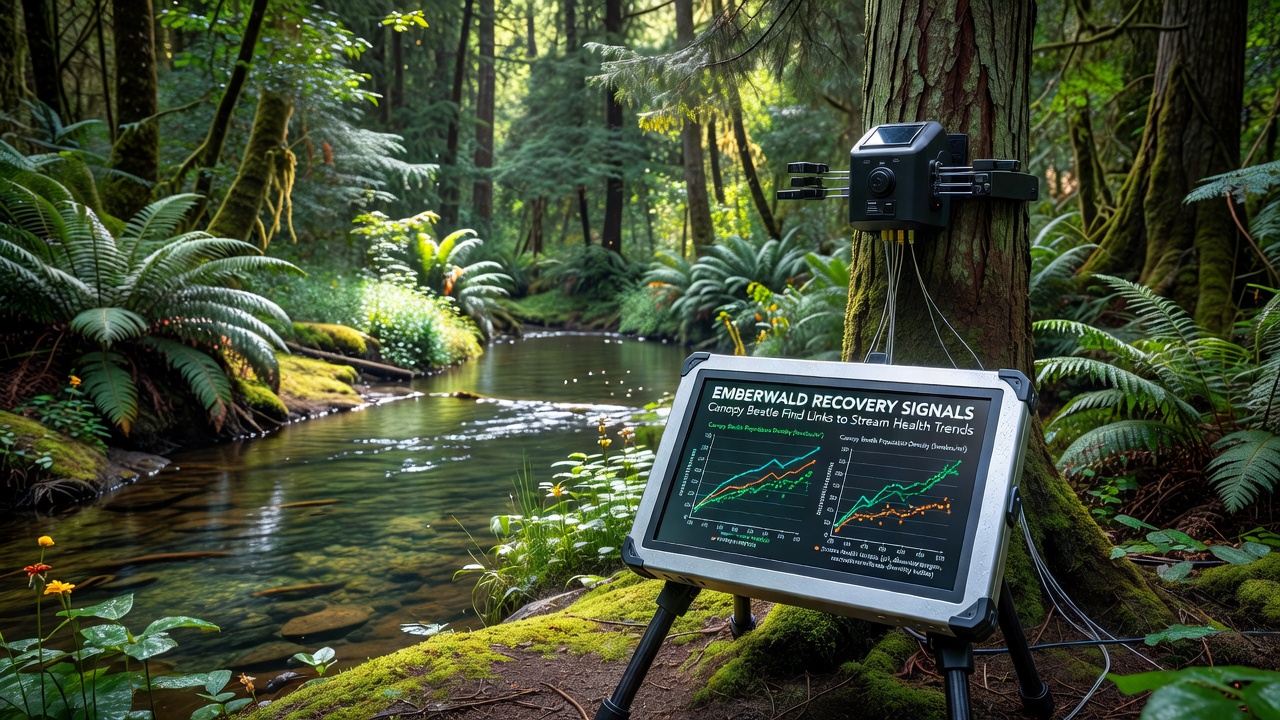
Researchers cross-reference aerial canopy surveys with benthic sampling to establish these links, and the combined datasets highlight how beetle-processed material reduces erosion along banks. European Environment Agency reports on similar temperate forests note comparable patterns where insect activity aids sediment control, while USDA Forest Service analyses emphasize the role of canopy insects in maintaining hydrological balance across North American sites. In Emberwald specifically, observers have tracked how beetle presence coincides with expanded moss and fern coverage along stream edges, which further stabilizes banks during seasonal floods.
Recent Data Collection and Analysis Methods
Field crews deployed pitfall traps and canopy fogging techniques throughout Emberwald in 2025 and 2026 to gather precise population counts, and they paired these efforts with continuous water sensors that log pH, turbidity, and nutrient flows in real time. Analysis of the resulting records reveals seasonal peaks in beetle activity during late summer months that precede measurable gains in stream biodiversity by several weeks. Such timing suggests causal pathways where canopy processing enriches soils ahead of autumn rains that carry materials into waterways.
University-led projects in the region apply statistical models to separate beetle effects from other variables like precipitation totals and land-use shifts, and initial outputs confirm strong positive correlations between beetle biomass and stream macroinvertebrate indices. Those examining the September 2026 dataset note that sites with the highest beetle recovery signals also posted the strongest improvements in overall stream health scores, including better scores for sensitive mayfly and stonefly species.
Broader Implications for Forest Management
Forest managers now incorporate canopy beetle surveys into routine assessments because these insects provide early warnings of recovery trajectories that stream monitoring alone might miss until later stages. Integrated approaches combine beetle data with remote sensing to prioritize areas for minimal intervention, allowing natural processes to continue without added disturbance. Australian research institutions have published parallel findings in eucalyptus-dominated systems, where beetle indicators similarly track improvements in downstream water quality after fire events.
Continued monitoring through the remainder of 2026 will test whether these patterns hold under varying weather conditions, and preliminary models predict sustained gains if beetle populations remain stable. The connections between canopy activity and stream conditions underscore the value of viewing forests and waterways as linked systems rather than isolated components.
Conclusion
Canopy beetle findings in Emberwald demonstrate measurable ties to stream health trends through nutrient pathways and habitat stabilization, with September 2026 data reinforcing these relationships across multiple watersheds. Ongoing research continues to refine monitoring protocols that capture these dynamics, and the resulting information supports evidence-based approaches to tracking ecosystem recovery over time.